Tag: technology

  • 🤖❤️ What AI Can’t Replace: The Human Side of Communication

    🤖❤️ What AI Can’t Replace: The Human Side of Communication

    In today’s rapidly evolving digital landscape, artificial intelligence (AI) has transformed the way we communicate. From chatbots providing instant customer support to AI tools drafting social media posts in seconds, the efficiency and scale of communication have reached unprecedented levels. Yet, even with its remarkable capabilities, AI faces a fundamental limitation: it can’t replicate the human side of communication—the emotional intelligence, creativity, and critical thinking that define meaningful interaction.


    🤝 Emotional Intelligence: The Heart of Human Connection

    AI can mimic language patterns and predict user behavior, but it struggles with emotional nuance. Communication isn’t just about exchanging information—it’s about connecting, empathizing, and responding to unspoken needs. According to a report by the World Economic Forum, emotional intelligence (EQ) is one of the top skills needed for the future workforce, precisely because machines can’t authentically replicate empathy, compassion, or moral judgment.

    While AI can recognize basic sentiments in text or voice (positive, negative, neutral), it doesn’t truly understand context or complex emotions like grief, sarcasm, or joy. A human communicator can adapt based on body language, cultural background, or subtle shifts in tone—areas where AI still falls short. Whether it’s counseling a colleague or crafting a sensitive corporate apology, human empathy remains irreplaceable.


    🎨 Creativity: The Human Spark AI Can’t Imitate

    AI excels at pattern recognition and optimization, but creativity involves breaking patterns, imagining the new, and making intuitive leaps that machines can’t predict. Even the most sophisticated AI models, like GPT or DALL-E, generate content based on existing data—they remix what’s already been done.

    True creativity, however, is about original thought and emotional resonance. Consider great speeches, impactful advertising campaigns, or boundary-pushing journalism—these aren’t just products of data analysis; they stem from unique human perspectives and emotional insight.

    A study from McKinsey & Company highlights that creativity is not just valuable—it’s essential. Companies that emphasized creativity in their strategies saw 67% greater organic revenue growth compared to their peers. AI can suggest headlines or slogans, but it’s human creatives who tap into cultural currents and emotional storytelling to forge real connections.


    🧠 Critical Thinking: The Guardrail Against AI Errors

    While AI can process vast amounts of information quickly, it lacks the ability to critically evaluate that information beyond statistical relevance. Critical thinking involves questioning assumptions, recognizing biases, and making ethical decisions—all of which are crucial in an age where AI can sometimes hallucinate or produce biased outputs.

    For example, AI models trained on skewed datasets can inadvertently amplify stereotypes or spread misinformation. Human communicators bring judgment and ethical reasoning into the equation, vetting information for accuracy, fairness, and social responsibility.

    The Stanford Institute for Human-Centered Artificial Intelligence (HAI) emphasizes that human oversight is vital to mitigate risks associated with AI-driven communication, especially in sensitive areas like healthcare, law, and journalism.


    🌍 The Future: Human-AI Collaboration, Not Replacement

    Rather than viewing AI as a replacement, the future of communication lies in partnership. AI can handle repetitive tasks—like scheduling emails, analyzing trends, or drafting initial content—freeing human communicators to focus on strategy, creativity, and relationship-building.

    We’re moving toward a model where AI amplifies human skills rather than replaces them. Human communicators bring the heart, imagination, and conscience that machines fundamentally lack.

    As Sundar Pichai, CEO of Alphabet, puts it:

    “AI is one of the most profound things we’re working on as humanity. It’s more profound than fire or electricity. But it’s humanity that must guide AI with wisdom.”


    ✨ Conclusion

    In the race to adopt the latest AI tools, it’s easy to get caught up in the excitement of automation. Yet, communication at its best is profoundly human—it’s emotional, creative, and deeply critical. No algorithm can replicate the warmth of empathy, the spark of original thought, or the rigor of ethical reasoning.

    As we look toward the future, embracing AI’s efficiency while leaning into our uniquely human strengths will ensure that communication remains not just faster and broader—but also more meaningful.
  • Who Gets Left Behind?

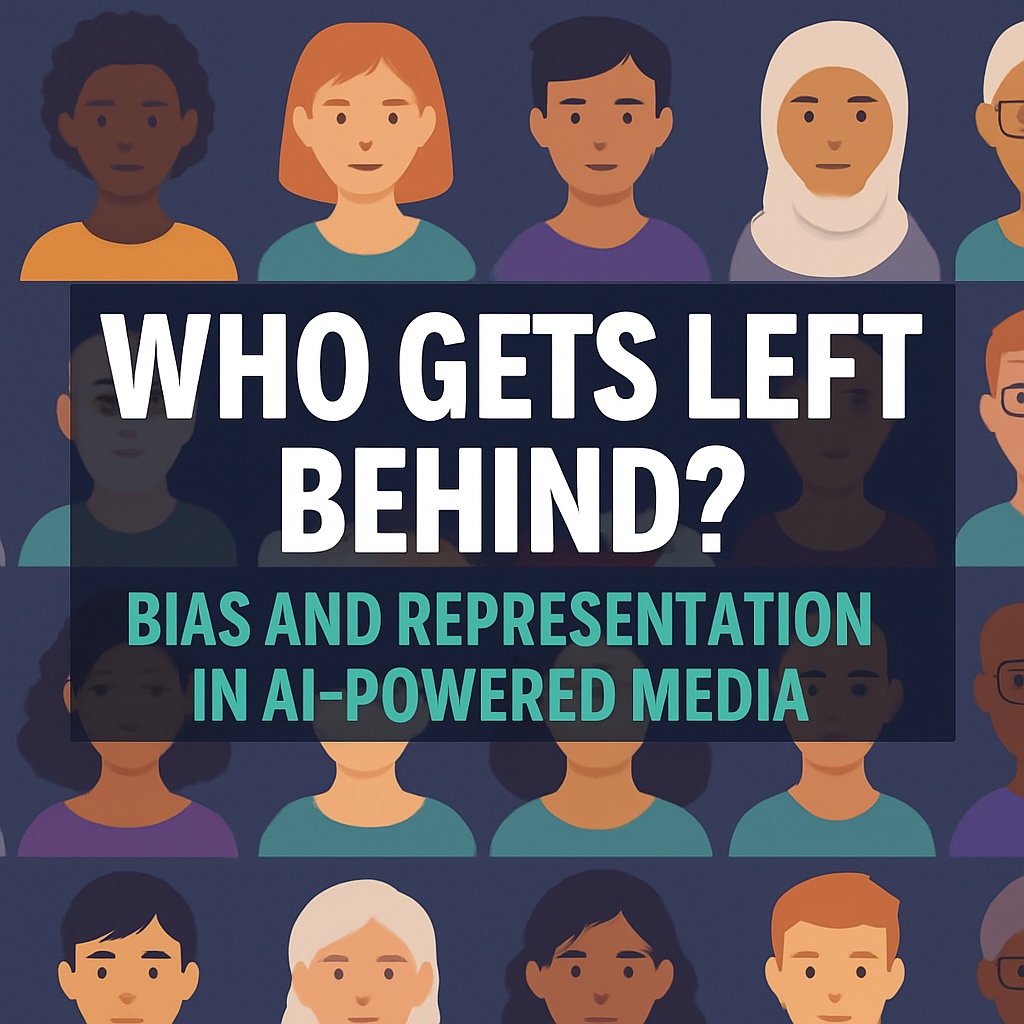
    Who Gets Left Behind?

    Bias and Representation in AI-Powered Media

    Artificial Intelligence is transforming the media and communications landscape—from how press releases are written to how marketing content is targeted. But as we celebrate these advances, it’s equally important to ask: Who is being excluded, misrepresented, or harmed by the AI systems behind our media tools?

    As future PR and media professionals, we must examine how bias enters the equation—and what we can do about it.


    📌 The Problem: Biased Data = Biased Output

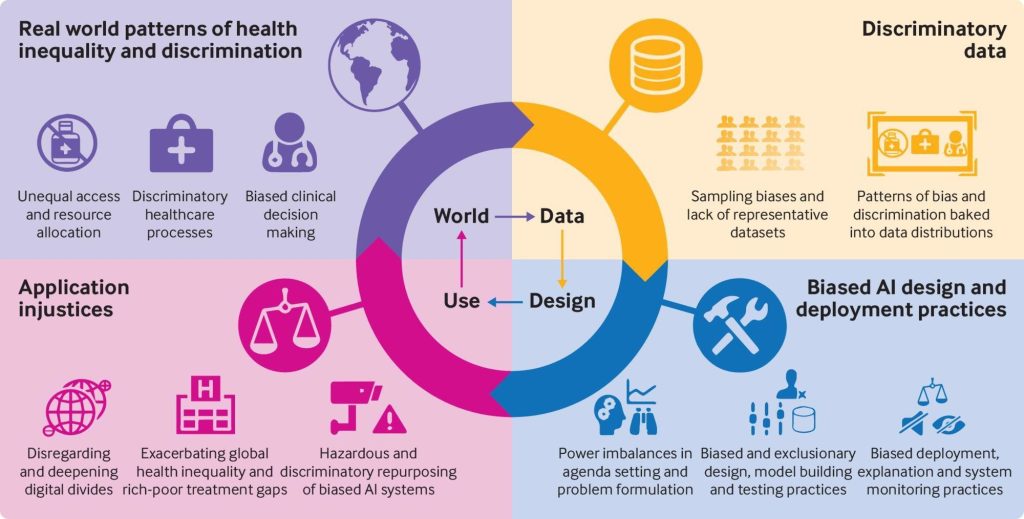
    AI tools learn by analyzing massive datasets—news articles, books, social media, and even historical ads. But as multiple researchers have shown, these sources often contain built-in social biases—including racism, sexism, and ableism.

    According to a landmark study by MIT and Stanford researchers, facial recognition algorithms were less than 35% accurate when identifying darker-skinned women, compared to over 99% for lighter-skinned men (Gender Shades Study). These systems weren’t deliberately designed to discriminate—but their training data skewed heavily white and male.

    The result? People from marginalized communities are more likely to be misidentified, misrepresented, or excluded altogether from AI-powered visual and language tools.


    🎙️ What This Means for PR and Media

    AI-driven tools like ChatGPT, DALL·E, and predictive analytics software are increasingly used in:

    • Press release writing
    • Media pitching
    • Visual content creation
    • Campaign targeting

    But if these tools are trained on biased data, they may:

    • Reinforce stereotypes in written or visual outputs
    • Exclude diverse audiences from campaign targeting
    • Misinterpret tone or language in multicultural contexts

    🛠️ What Can We Do About It?

    Here are steps communicators can take to use AI responsibly and inclusively:

    1. Audit Your AI Tools

    Check what datasets your tools are using. If it’s not transparent, ask questions. Push for tools that are trained on diverse, representative data.

    2. Don’t Automate Without Oversight

    Human judgment is still essential. Always review AI-generated content for bias, misrepresentation, or tone-deaf phrasing—especially when representing underrepresented communities.

    3. Use Inclusive Design Standards

    Tools like Microsoft’s Inclusive Design Toolkit and OpenAI’s own bias mitigation strategies can guide content creators in producing more equitable work.

    4. Promote Algorithmic Transparency

    Support policies and practices that require AI platforms to disclose how decisions are made—whether in media coverage, hiring, or content distribution.


    💡 Looking Forward: AI as a Force for Equity?

    It’s not all bad news. AI can also help highlight bias and create space for voices that were historically ignored. Tools like Perspective API aim to reduce toxic comments in online spaces. Other platforms are now developing models specifically trained on inclusive datasets.

    Still, the progress will depend on how we design, question, and use these systems. As communicators, we have an ethical responsibility not just to use AI—but to challenge it when it falls short.


    📣 Final Thoughts

    Bias in AI is a reflection of societal inequalities. And in the world of media and communications, those inequalities can get amplified at scale.

    Let’s be the generation of PR and media leaders who don’t just adopt AI—but shape it to be more just, inclusive, and human.


    📚 Sources & Further Reading:


  • How Microsoft’s AI for Earth Campaign Exemplifies Strategic CSR

    How Microsoft’s AI for Earth Campaign Exemplifies Strategic CSR

    Corporate social responsibility (CSR) plays a powerful role in shaping how companies engage with the world. One standout example is Microsoft’s AI for Earth initiative, which merges advanced technology with environmental impact. This campaign not only promotes sustainability through innovation, but also demonstrates how strategic communication can elevate a company’s values and public trust.


    💡 What Is AI for Earth?

    Launched in 2017, AI for Earth is Microsoft’s commitment to using artificial intelligence to solve urgent environmental challenges. With over $50 million invested, the program funds and supports researchers, nonprofits, and governments using AI in four key areas:

    • Climate change
    • Biodiversity
    • Water
    • Agriculture

    Through grants, cloud resources, and open-source tools, AI for Earth empowers global changemakers to better understand and respond to the planet’s most pressing problems. For example, Microsoft supported the Wild Me project, which uses AI to help track endangered species through facial recognition-like technology.

    Wild Me AI Conservation campaign

    Learn more at: https://www.microsoft.com/en-us/ai/ai-for-earth


    Strategic Communication: Storytelling Meets Data

    Microsoft’s communication strategy for AI for Earth is a masterclass in values-driven branding and transparent storytelling. Here’s how they do it:

    1. Visual Storytelling with Real-World Examples

    The company highlights case studies on their website and YouTube channel that follow scientists and researchers using Microsoft’s tools to drive change. These personal stories give life to abstract data and technology.

    Example: In a feature about SilviaTerra, a forest-monitoring AI project, Microsoft combines drone footage, testimonials, and data visualizations to create an emotionally resonant story of climate action.

    2. Omnichannel Promotion

    AI for Earth is promoted across Microsoft’s digital ecosystem:

    • LinkedIn and X (Twitter): Regular updates, grant announcements, and climate news
    • YouTube: Mini-documentaries and expert interviews
    • Blog and newsroom: Long-form storytelling with shareable infographics

    3. Thought Leadership

    Executives like Brad Smith (Vice Chair & President of Microsoft) frequently tie the campaign to larger global goals like the United Nations Sustainable Development Goals (SDGs). This positions Microsoft not just as a tech leader but as a global citizen.


    Evaluating Effectiveness

    The AI for Earth campaign succeeds by merging authentic content with strategic channel use. Unlike superficial greenwashing efforts, Microsoft backs its messaging with measurable commitments—like becoming carbon negative by 2030 and zero waste by 2030.

    A 2022 Edelman Trust Barometer report noted that 78% of consumers expect companies to act on climate, and Microsoft has responded with transparency and consistency. Their use of third-party partnerships—such as with the World Resources Institute—also boosts the initiative’s credibility.


    Brand Alignment and Ethical Consistency

    AI for Earth is an extension of Microsoft’s brand identity. Their broader CSR strategy includes:

    • Responsible AI development
    • Digital skills training for underserved communities
    • Data privacy and governance leadership

    Together, these initiatives reflect Microsoft’s positioning as a company at the intersection of innovation, ethics, and inclusion.


    📌 Final Takeaways

    AI for Earth is a leading example of how a CSR campaign can inform and influence across sectors. For students and professionals entering fields like PR, tech, or digital marketing, it serves as a powerful case study in how communication can elevate impact.

  • How the AI for Good Foundation is Shaping the Future of Ethical AI

    How the AI for Good Foundation is Shaping the Future of Ethical AI

    As the role of artificial intelligence continues to expand across industries, it’s becoming clear that learning how to use AI responsibly is just as important as learning how to use it effectively. In this post, I’m taking a closer look at the AI for Good Foundation — a nonprofit that’s at the forefront of aligning AI technology with social impact. Their work provides a great example for anyone entering the communications or tech field who wants to engage with AI in a way that is both ethical and community-focused.

    What is the AI for Good Foundation?

    The AI for Good Foundation was founded in 2015 with a mission to use artificial intelligence to advance global social good. Their focus is on aligning AI development with the United Nations Sustainable Development Goals (SDGs), from reducing poverty to improving access to education. They work with researchers, nonprofits, corporations, and governments to create scalable, ethical solutions to some of the world’s biggest challenges.

    Some of their key projects include humanitarian tools like the Eureka Platform, which connects refugees to real-time information about food, shelter, and healthcare. They also run educational programs to help students and professionals integrate AI knowledge with a commitment to social impact. Another major part of their work is conducting AI audits to assess whether systems are being developed in ways that are ethical, inclusive, and sustainable.

    How They Meet Community Needs

    One thing that stands out about the AI for Good Foundation is their clear understanding of real-world needs. Instead of developing technology for technology’s sake, they focus on solving problems that directly impact vulnerable communities. For example, the Eureka Platform is not just a cool tech project — it’s a life-saving tool for people displaced by war or natural disasters.

    Their educational initiatives also address a major gap in the AI world: the lack of accessible, interdisciplinary learning opportunities. By offering programs like the AI+SDGs Launchpad, they’re helping to create a generation of technologists and communicators who think beyond profit and innovation to consider human rights and equity.

    My Perspective on Their Effectiveness

    From what I’ve seen, the AI for Good Foundation is incredibly effective because they blend technical innovation with social consciousness. Their work shows that AI isn’t just about coding smarter algorithms, but about creating systems that genuinely improve people’s lives. I especially appreciate their commitment to transparency and collaboration across sectors, which is something that’s often missing in the tech world.

    For students and young professionals entering fields like communications, public relations, tech, or policy, the AI for Good Foundation offers a powerful example of how AI can be used thoughtfully and responsibly. Engaging with their work can be a way to stay grounded in ethics while still being excited about all the opportunities AI can offer.

    Learn More