Category: Harper Wells

  • 🤖❤️ What AI Can’t Replace: The Human Side of Communication

    🤖❤️ What AI Can’t Replace: The Human Side of Communication

    In today’s rapidly evolving digital landscape, artificial intelligence (AI) has transformed the way we communicate. From chatbots providing instant customer support to AI tools drafting social media posts in seconds, the efficiency and scale of communication have reached unprecedented levels. Yet, even with its remarkable capabilities, AI faces a fundamental limitation: it can’t replicate the human side of communication—the emotional intelligence, creativity, and critical thinking that define meaningful interaction.


    🤝 Emotional Intelligence: The Heart of Human Connection

    AI can mimic language patterns and predict user behavior, but it struggles with emotional nuance. Communication isn’t just about exchanging information—it’s about connecting, empathizing, and responding to unspoken needs. According to a report by the World Economic Forum, emotional intelligence (EQ) is one of the top skills needed for the future workforce, precisely because machines can’t authentically replicate empathy, compassion, or moral judgment.

    While AI can recognize basic sentiments in text or voice (positive, negative, neutral), it doesn’t truly understand context or complex emotions like grief, sarcasm, or joy. A human communicator can adapt based on body language, cultural background, or subtle shifts in tone—areas where AI still falls short. Whether it’s counseling a colleague or crafting a sensitive corporate apology, human empathy remains irreplaceable.


    🎨 Creativity: The Human Spark AI Can’t Imitate

    AI excels at pattern recognition and optimization, but creativity involves breaking patterns, imagining the new, and making intuitive leaps that machines can’t predict. Even the most sophisticated AI models, like GPT or DALL-E, generate content based on existing data—they remix what’s already been done.

    True creativity, however, is about original thought and emotional resonance. Consider great speeches, impactful advertising campaigns, or boundary-pushing journalism—these aren’t just products of data analysis; they stem from unique human perspectives and emotional insight.

    A study from McKinsey & Company highlights that creativity is not just valuable—it’s essential. Companies that emphasized creativity in their strategies saw 67% greater organic revenue growth compared to their peers. AI can suggest headlines or slogans, but it’s human creatives who tap into cultural currents and emotional storytelling to forge real connections.


    🧠 Critical Thinking: The Guardrail Against AI Errors

    While AI can process vast amounts of information quickly, it lacks the ability to critically evaluate that information beyond statistical relevance. Critical thinking involves questioning assumptions, recognizing biases, and making ethical decisions—all of which are crucial in an age where AI can sometimes hallucinate or produce biased outputs.

    For example, AI models trained on skewed datasets can inadvertently amplify stereotypes or spread misinformation. Human communicators bring judgment and ethical reasoning into the equation, vetting information for accuracy, fairness, and social responsibility.

    The Stanford Institute for Human-Centered Artificial Intelligence (HAI) emphasizes that human oversight is vital to mitigate risks associated with AI-driven communication, especially in sensitive areas like healthcare, law, and journalism.


    🌍 The Future: Human-AI Collaboration, Not Replacement

    Rather than viewing AI as a replacement, the future of communication lies in partnership. AI can handle repetitive tasks—like scheduling emails, analyzing trends, or drafting initial content—freeing human communicators to focus on strategy, creativity, and relationship-building.

    We’re moving toward a model where AI amplifies human skills rather than replaces them. Human communicators bring the heart, imagination, and conscience that machines fundamentally lack.

    As Sundar Pichai, CEO of Alphabet, puts it:

    “AI is one of the most profound things we’re working on as humanity. It’s more profound than fire or electricity. But it’s humanity that must guide AI with wisdom.”


    ✨ Conclusion

    In the race to adopt the latest AI tools, it’s easy to get caught up in the excitement of automation. Yet, communication at its best is profoundly human—it’s emotional, creative, and deeply critical. No algorithm can replicate the warmth of empathy, the spark of original thought, or the rigor of ethical reasoning.

    As we look toward the future, embracing AI’s efficiency while leaning into our uniquely human strengths will ensure that communication remains not just faster and broader—but also more meaningful.

  • Blending Culture, Creativity, and AI: Insights from Amar Oberoi

    Blending Culture, Creativity, and AI: Insights from Amar Oberoi

    In a world where artificial intelligence (AI) is rapidly reshaping industries, the ability to blend technology with creativity is no longer optional. Amar Oberoi, a rising leader in digital marketing strategy, exemplifies this shift.

    His work helping brands translate culture into tangible business outcomes—especially during major events like the WNBA All-Star Weekend—shows how strategic innovation powered by AI can drive real success. Oberoi’s experience offers key insights for marketers and communicators navigating today’s tech-driven landscape.


    📚 Expert Bio

    Amar Oberoi is a Public Relations major with a minor in Computer & Information Technology, focused on Artificial Intelligence.

    He co-founded a digital marketing and strategy consulting company with his father, helping brands translate culture into business results, particularly during high-impact moments like major sports events.


    🔍 Curiosity Sparked a Career Shift

    When asked how he first got into AI, Oberoi reflects on the power of curiosity, explaining, “Initially, I got into AI out of curiosity. It was a buzzword everyone was throwing around.”

    His early experiments with tools like ChatGPT quickly became more than just casual dabbling. “I started playing around with tools like ChatGPT and realized they could actually help streamline my creative and strategic process,” he said. What began as simple exploration soon evolved into an essential part of his workflow—and ultimately, a competitive edge he could offer to clients.


    🏀 AI in Action: Winning Big at WNBA All-Star Weekend

    One of Oberoi’s standout projects took place during the WNBA All-Star Weekend, where he led a brand activation inside the All-Star Expo while working for Round 21. Reflecting on the experience, he said, “One of my favorite AI-supported projects was during WNBA All-Star Weekend.” The goal was to “drive views and foot traffic, while selling merchandise on-site at the event as well as drive traffic to the brand’s website outside of the event.”

    To meet these objectives, Oberoi turned to AI tools.

    “I used AI to help structure our strategy deck, brainstorm content angles, and refine our outreach plan,” he said.

    Collaboration was key to amplifying the campaign’s impact. “We ended up collaborating with athletes and podcasters, which boosted our brand visibility significantly,” said Oberoi.

    The results spoke for themselves:

    “Despite the overhead of securing space at the Expo, our campaign made the event more profitable for the brand according to analytics. There was no way to tell if it was us or everything with us, but it was definitely a team effort that the brand appreciated.”

    Highlight:
    The team’s focus on:

    • Reels
    • Short-form content, mapped out and refined using AI

    helped drive on-site merchandise sales and improve online engagement.


    🛠️ Daily AI Tools That Power Innovation

    Oberoi’s day-to-day toolkit includes a pair of powerful AI resources:

    🔹 ChatGPT

    “I use this to organize ideas and client strategies, draft content and captions, build structured pitches and marketing plans, and explore creative angles under tight deadlines.”

    🔹 Notebook LLM

    “I use this to visualize and organize mind maps, learn new concepts more quickly, break down complex information into digestible formats, and retain content that’s not in my immediate wheelhouse (e.g., legal, technical, or niche topics).”

    📝 Result:
    These tools allow him to balance creativity with efficiency, helping him meet tight deadlines while ensuring strategic depth.


    ⚖️ An Ethical Compass for AI Development

    With AI’s growth comes a responsibility to develop it ethically. Oberoi outlined five key principles:

    • Data Privacy :“Users need full transparency on where their data is going and how it’s being stored or reused.”
    • Consent and Control: “Users should have the right to limit what AI tools can learn from them.”
    • Information Boundaries: “Not all knowledge needs to be public or infinitely available. There needs to be ethical guidelines on what AI is allowed to access and replicate.”
    • Human Dependency: “Developers should ask: Are we building tools that support human capability or fully replace it? Balance is key.”
    • Bias and Representation: “AI should be built with input from diverse creators to avoid reinforcing systemic bias.”

    🔮 The Future: AI as a Daily Co-Pilot

    Looking ahead, Oberoi sees AI becoming an indispensable part of everyday professional life:

    “I see AI transforming the role of personal assistants and strategic planners. Apps like Motion.ai are already pushing us toward a ‘Jarvis from Iron Man’ future, ” he said.

    🛠️ Tasks AI will handle:

    • Calendar management
    • Inbox filtering
    • Pitch deck preparation

    But Oberoi is quick to clarify:

    “In marketing and digital strategy, AI won’t replace the human element—but it will become a daily co-pilot. Just like the internet made snail mail less relevant, AI will reshape roles across industries.”

    🌟 Big Opportunity:

    “Those who can adapt, especially creatives and communicators, will help build entirely new career paths we haven’t seen before.”


    Amar Oberoi’s journey shows that AI isn’t about replacing creativity—it’s about enhancing it.

    His work provides a roadmap for young professionals and industry veterans alike:
    ✅ Stay curious
    ✅ Innovate responsibly
    ✅ Embrace AI as a tool for strategic growth

    As Oberoi’s career demonstrates, those who merge creativity with technology today are the ones who will define the industries of tomorrow.

  • Who Gets Left Behind?

    Who Gets Left Behind?

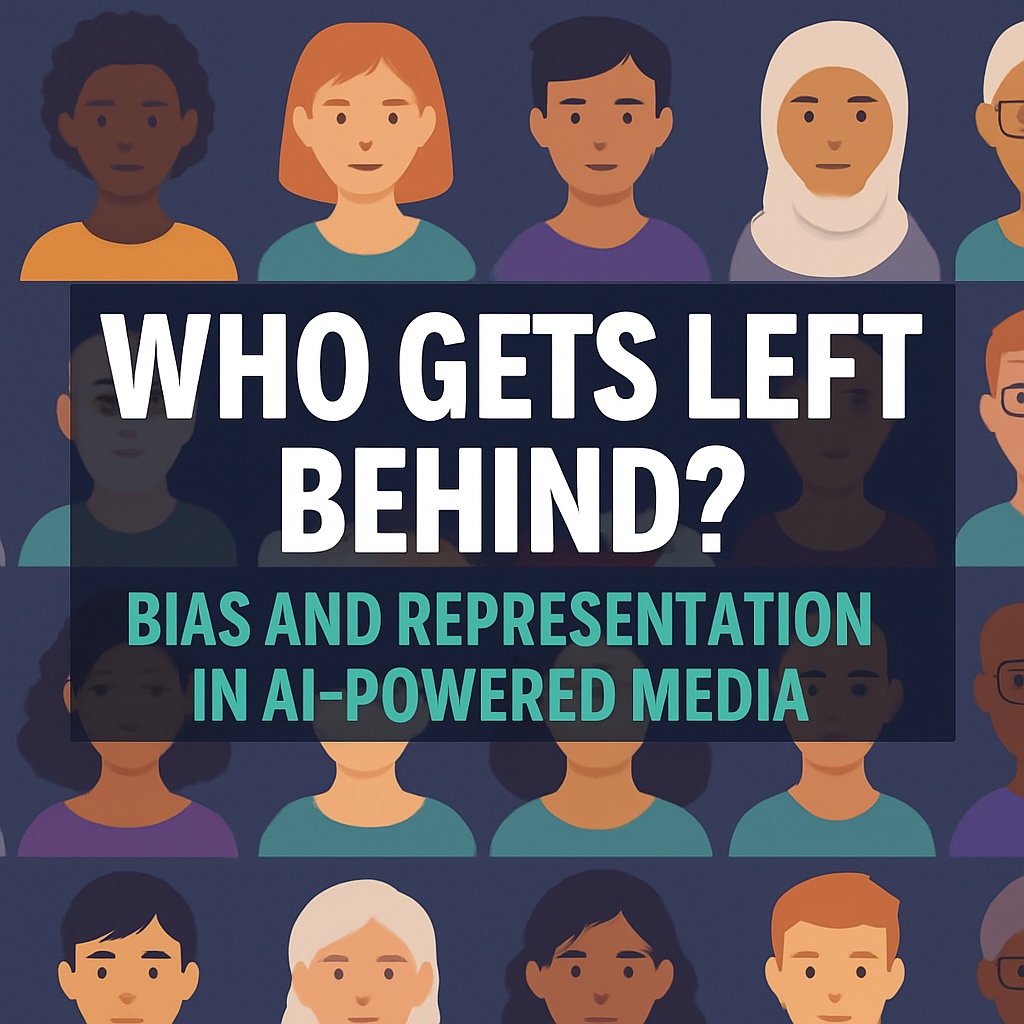
    Bias and Representation in AI-Powered Media

    Artificial Intelligence is transforming the media and communications landscape—from how press releases are written to how marketing content is targeted. But as we celebrate these advances, it’s equally important to ask: Who is being excluded, misrepresented, or harmed by the AI systems behind our media tools?

    As future PR and media professionals, we must examine how bias enters the equation—and what we can do about it.


    📌 The Problem: Biased Data = Biased Output

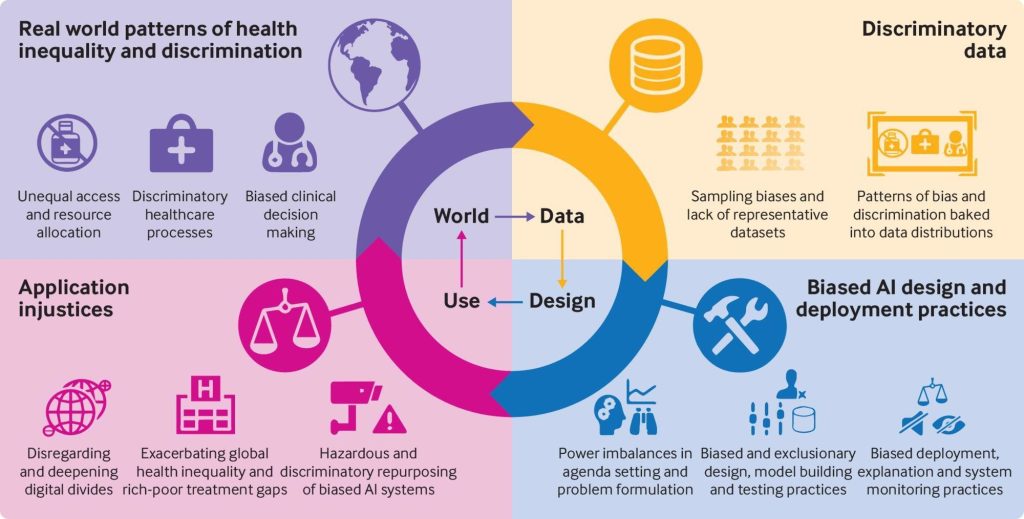
    AI tools learn by analyzing massive datasets—news articles, books, social media, and even historical ads. But as multiple researchers have shown, these sources often contain built-in social biases—including racism, sexism, and ableism.

    According to a landmark study by MIT and Stanford researchers, facial recognition algorithms were less than 35% accurate when identifying darker-skinned women, compared to over 99% for lighter-skinned men (Gender Shades Study). These systems weren’t deliberately designed to discriminate—but their training data skewed heavily white and male.

    The result? People from marginalized communities are more likely to be misidentified, misrepresented, or excluded altogether from AI-powered visual and language tools.


    🎙️ What This Means for PR and Media

    AI-driven tools like ChatGPT, DALL·E, and predictive analytics software are increasingly used in:

    • Press release writing
    • Media pitching
    • Visual content creation
    • Campaign targeting

    But if these tools are trained on biased data, they may:

    • Reinforce stereotypes in written or visual outputs
    • Exclude diverse audiences from campaign targeting
    • Misinterpret tone or language in multicultural contexts

    🛠️ What Can We Do About It?

    Here are steps communicators can take to use AI responsibly and inclusively:

    1. Audit Your AI Tools

    Check what datasets your tools are using. If it’s not transparent, ask questions. Push for tools that are trained on diverse, representative data.

    2. Don’t Automate Without Oversight

    Human judgment is still essential. Always review AI-generated content for bias, misrepresentation, or tone-deaf phrasing—especially when representing underrepresented communities.

    3. Use Inclusive Design Standards

    Tools like Microsoft’s Inclusive Design Toolkit and OpenAI’s own bias mitigation strategies can guide content creators in producing more equitable work.

    4. Promote Algorithmic Transparency

    Support policies and practices that require AI platforms to disclose how decisions are made—whether in media coverage, hiring, or content distribution.


    💡 Looking Forward: AI as a Force for Equity?

    It’s not all bad news. AI can also help highlight bias and create space for voices that were historically ignored. Tools like Perspective API aim to reduce toxic comments in online spaces. Other platforms are now developing models specifically trained on inclusive datasets.

    Still, the progress will depend on how we design, question, and use these systems. As communicators, we have an ethical responsibility not just to use AI—but to challenge it when it falls short.


    📣 Final Thoughts

    Bias in AI is a reflection of societal inequalities. And in the world of media and communications, those inequalities can get amplified at scale.

    Let’s be the generation of PR and media leaders who don’t just adopt AI—but shape it to be more just, inclusive, and human.


    📚 Sources & Further Reading:


  • Visualizing AI in Action: What Makes an Infographic Work?

    Visualizing AI in Action: What Makes an Infographic Work?

    In the rapidly evolving world of communications and AI, conveying complex information clearly and effectively is more important than ever. As someone exploring the intersection of artificial intelligence and public relations, I’ve analyzed two infographics that effectively break down intricate AI concepts into visually digestible formats. These examples not only inform but also inspire better design practices for anyone creating infographics on technical topics.

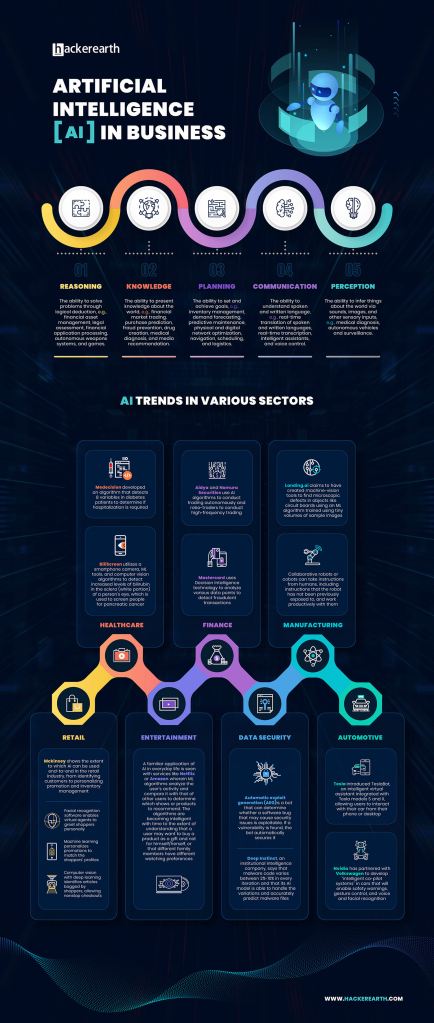
    1. Artificial Intelligence in Business

    This infographic from Visual Capitalist highlights how AI is transforming different business sectors—from marketing and HR to finance and logistics.

    Why It’s Effective:

    • Visual Hierarchy & Organization: The layout uses a winding path with clear section dividers, making the progression of information easy to follow. Icons at the top simplify each use case before diving into more detail below.
    • Color Choices: Each section is color-coded, making it easier to distinguish between categories and trends. The dark background helps the bright icons and text pop.
    • Typography: Headings are large and legible, and subtext is minimal but informative. The font style is consistent, clean, and easy on the eyes.
    • Text-Visual Balance: Visual cues like icons and charts guide the reader through the content, keeping it from feeling text-heavy.
    • Data Storytelling: It begins with broad insights (AI use cases), moves into industry-specific applications, and ends with forward-looking trends. This flow tells a compelling, logical story of AI’s growing role in business.
    • What I’d Apply: The use of a winding path and color segmentation is a great way to organize sections of an infographic about evolving technology use in PR—something I’d like to try for my own project.

    2. Agentic AI vs. AI Assistants by USAII

    This infographic compares two types of AI: the reactive AI assistants we know (like Siri and Alexa) and more autonomous, proactive agentic AI systems.

    Why It’s Effective:

    • Visual Hierarchy & Organization: The layout is vertically aligned and uses large, bold headers to clearly separate each section—ideal for mobile scrolling.
    • Color Use: It uses contrasting tones—purple for AI assistants and blue for AI agents—to visually reinforce the comparison. Highlights in pink and neon blue draw attention to stats and keywords.
    • Typography: The font hierarchy makes distinctions between titles, data points, and descriptions very clear. Keywords are emphasized using color and bold type.
    • Text-Visual Balance: The infographic integrates small illustrations (like robots, gears, and tech icons) alongside short, punchy text. These visuals help translate abstract concepts into relatable images.
    • Storytelling: It starts with the market value of AI assistants, builds into definitions and examples, and ends with a feature-by-feature comparison chart. The story has a clear beginning, middle, and end.
    • What I’d Apply: The side-by-side comparison chart is a helpful way to clarify differences in complex technologies. I’d like to include a similar chart in my infographic to contrast AI tools used in PR education and practice.

    Final Takeaways

    These infographics are strategic visual tools. They work because they:

    • Prioritize clarity through structure and design
    • Use color and typography to guide the eye
    • Balance visuals and text to avoid overwhelming the viewer
    • Build a logical narrative that draws you in

    As I build my own infographic on AI literacy in public relations, I plan to implement some of these tactics Using strong organization, strategic color choices, and clear storytelling will help me translate complex data into something my audience can understand and act on.

  • AI Survival Kit: 5 Must-Try Tools for Every PR Student Before Graduation

    AI Survival Kit: 5 Must-Try Tools for Every PR Student Before Graduation

    Whether you’re drafting press releases on deadline or tracking trending hashtags for a brand campaign, AI is no longer a “future tool”—it’s now a core part of the modern PR toolkit. As a PR student preparing to enter a rapidly evolving industry, learning to work with AI will give you a serious edge. Here are five AI tools every PR student should test-drive before tossing that graduation cap.


    1. ChatGPT – Your Copywriting Sidekick

    Use it for: Brainstorming headlines, writing pitches, drafting media statements
    ChatGPT helps streamline writing tasks and overcome creative blocks. For example, say you need to pitch a client’s new eco-product launch—ChatGPT can help you generate multiple angles tailored to journalists’ beats or outlets’ styles.
    Pro Tip: Always fact-check and personalize before using any output. AI is powerful, but not infallible.
    📌 Try it: https://chat.openai.com


    2. Canva Magic Write – Visuals Meet Copy

    Use it for: Social media posts, content planning, and campaign visuals
    Canva’s Magic Write, part of its AI suite, can help you ideate captions and draft campaign content within the design platform itself. Pair that with smart templates and you’ve got an end-to-end content machine.
    Example: Use Magic Write to plan a week’s worth of Mental Health Awareness Month posts in Jellycat’s tone—then auto-generate visuals to match.
    📌 Explore it here: Canva’s AI tools


    3. Meltwater – AI-Powered Media Monitoring

    Use it for: Tracking brand mentions, analyzing sentiment, spotting crises
    Meltwater uses machine learning to process news and social media content in real time. This means you can monitor how a brand is being perceived and react quickly.
    Why it matters: Understanding how audiences respond to messages is critical—and increasingly, that analysis starts with AI.
    📌 Learn more: Meltwater Media Intelligence


    4. Lately.ai – Social Media Post Generator

    Use it for: Turning long-form content (like blogs or interviews) into bite-sized, on-brand social posts
    Instead of manually pulling quotes from a podcast or event, Lately.ai automatically generates dozens of post drafts with hashtags and tone analysis. It’s a huge time-saver and helps build consistency across platforms.
    Fun fact: According to MarTech, Lately’s AI model was trained on over 1 million posts.
    📌 Explore Lately: https://www.lately.ai


    5. DALL·E – Visual Storytelling Reinvented

    Use it for: Creating original illustrations, mockups, and campaign concepts
    AI-generated images can boost your pitch decks, mood boards, or even social media campaigns. Imagine presenting a conceptual ad campaign to a client with visuals generated in minutes.
    Caution: Always check copyright and terms if you’re using images in a public-facing campaign.
    📌 Try DALL·E inside ChatGPT or at: https://openai.com/dall-e


    Final Thoughts:

    Learning these tools isn’t just about efficiency—it’s about future-proofing your skills. PR pros who know how to work with AI will be able to move faster, think more strategically, and deliver deeper insights. That doesn’t mean ditching human creativity—it means enhancing it.

    🔗 Want to dig deeper into AI and PR? Check out this piece on AI prompts in communications
    🔗 For broader trends, read Muck Rack’s 2024 State of PR Report

  • Designing Plushies with Purpose: How I Used AI to Build a Mental Health Campaign for Jellycat

    Designing Plushies with Purpose: How I Used AI to Build a Mental Health Campaign for Jellycat

    For my latest blog free-write, I wanted to do something imaginative—something that showed how artificial intelligence can support creative strategy, not just automate tasks. I decided I wanted to create a new campaign for one of my favorite companies: Jellycat.

    Here’s how I used AI to develop a full campaign concept, content calendar, and even a brand-new line of mental health–inspired plushies.


    🧠 Step 1: Imagining the Campaign

    Mental Health Awareness Month (May) is a perfect opportunity for brands to promote wellness in ways that feel meaningful—not performative. Jellycat, with its emotionally comforting brand identity, felt like the perfect fit.

    I envisioned:

    • A special line of plushies designed around mental health icons (e.g., a brain, a heart, a sunshine character)
    • A cross-platform social media campaign delivering daily affirmations, self-care reminders, and community prompts
    • Content that felt authentic to Jellycat’s gentle, whimsical voice while still supporting serious topics
    Image generated by ChatGPT

    🤖 Step 2: Using AI to Brainstorm and Build

    AI didn’t just help me write captions. It helped bring the whole vision together.

    Here’s what AI contributed to:

    • Campaign messaging: I used ChatGPT to ideate affirmations and soft-touch messages that align with both Jellycat’s voice and mental health best practices.
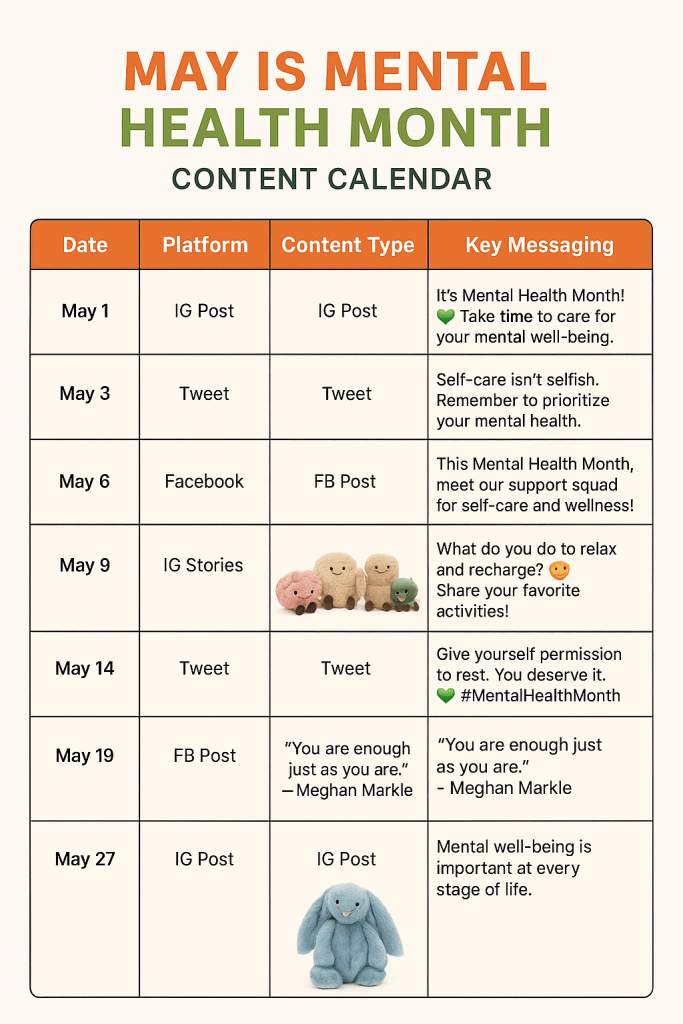
    • Platform strategy: I created a platform-specific content calendar for Instagram, Twitter, and Facebook, featuring post types like:
      • “Meet the Plush” character intros
      • Daily affirmations
      • Community reposts and user-generated content
    • Visual design prompts: Using AI image generators, I created mock-ups of plush characters like:
      • A pink brain with a stitched-on smile
      • A glowing sun with soft arms
      • A calming heart plush
    • Inspiration prompts: I referenced tools like the Spin Sucks AI Prompt Library to guide tone, audience targeting, and post structure.
    • Content Calendar: AI generated a mock content calendar for the month of May, with types of posts for different platforms and key messaging.

    💬 Why This Matters

    This wasn’t just a fun creative exercise—it highlighted how AI can enhance storytelling in real, strategic ways. Here’s what I learned:

    • AI doesn’t replace creativity. I still had to make decisions about voice, tone, and visual direction, but AI helped speed up brainstorming and execution.
    • Soft content can be powerful. Especially around mental health, comfort-driven communication can make people feel seen without overwhelming them.
    • Campaigns like this work. Research shows emotional storytelling improves brand connection and retention. In fact, 76% of people experience stress-related symptoms weekly, and comforting content can help spark conversations or simply make someone feel better.

    🌟 Final Thoughts

    Designing this hypothetical Jellycat campaign reminded me why I love the intersection of communication and tech. With the right prompts and intentions, AI can bring an abstract idea to life.

    This also increased my confidence to pitch ideas using AI. When used correctly, AI can bring your ideas to life in an incredibly efficient and powerful way. This is definitely a strategy I will use when entering the PR and communications world.

    PS… Jellycat just came out with a new line of summer plushies. Here is the link to check them out… They are adorable.

    https://us.jellycat.com/collections/spring-summer

  • How Microsoft’s AI for Earth Campaign Exemplifies Strategic CSR

    How Microsoft’s AI for Earth Campaign Exemplifies Strategic CSR

    Corporate social responsibility (CSR) plays a powerful role in shaping how companies engage with the world. One standout example is Microsoft’s AI for Earth initiative, which merges advanced technology with environmental impact. This campaign not only promotes sustainability through innovation, but also demonstrates how strategic communication can elevate a company’s values and public trust.


    💡 What Is AI for Earth?

    Launched in 2017, AI for Earth is Microsoft’s commitment to using artificial intelligence to solve urgent environmental challenges. With over $50 million invested, the program funds and supports researchers, nonprofits, and governments using AI in four key areas:

    • Climate change
    • Biodiversity
    • Water
    • Agriculture

    Through grants, cloud resources, and open-source tools, AI for Earth empowers global changemakers to better understand and respond to the planet’s most pressing problems. For example, Microsoft supported the Wild Me project, which uses AI to help track endangered species through facial recognition-like technology.

    Wild Me AI Conservation campaign

    Learn more at: https://www.microsoft.com/en-us/ai/ai-for-earth


    Strategic Communication: Storytelling Meets Data

    Microsoft’s communication strategy for AI for Earth is a masterclass in values-driven branding and transparent storytelling. Here’s how they do it:

    1. Visual Storytelling with Real-World Examples

    The company highlights case studies on their website and YouTube channel that follow scientists and researchers using Microsoft’s tools to drive change. These personal stories give life to abstract data and technology.

    Example: In a feature about SilviaTerra, a forest-monitoring AI project, Microsoft combines drone footage, testimonials, and data visualizations to create an emotionally resonant story of climate action.

    2. Omnichannel Promotion

    AI for Earth is promoted across Microsoft’s digital ecosystem:

    • LinkedIn and X (Twitter): Regular updates, grant announcements, and climate news
    • YouTube: Mini-documentaries and expert interviews
    • Blog and newsroom: Long-form storytelling with shareable infographics

    3. Thought Leadership

    Executives like Brad Smith (Vice Chair & President of Microsoft) frequently tie the campaign to larger global goals like the United Nations Sustainable Development Goals (SDGs). This positions Microsoft not just as a tech leader but as a global citizen.


    Evaluating Effectiveness

    The AI for Earth campaign succeeds by merging authentic content with strategic channel use. Unlike superficial greenwashing efforts, Microsoft backs its messaging with measurable commitments—like becoming carbon negative by 2030 and zero waste by 2030.

    A 2022 Edelman Trust Barometer report noted that 78% of consumers expect companies to act on climate, and Microsoft has responded with transparency and consistency. Their use of third-party partnerships—such as with the World Resources Institute—also boosts the initiative’s credibility.


    Brand Alignment and Ethical Consistency

    AI for Earth is an extension of Microsoft’s brand identity. Their broader CSR strategy includes:

    • Responsible AI development
    • Digital skills training for underserved communities
    • Data privacy and governance leadership

    Together, these initiatives reflect Microsoft’s positioning as a company at the intersection of innovation, ethics, and inclusion.


    📌 Final Takeaways

    AI for Earth is a leading example of how a CSR campaign can inform and influence across sectors. For students and professionals entering fields like PR, tech, or digital marketing, it serves as a powerful case study in how communication can elevate impact.

  • How I Used AI to Curate the Perfect Wardrobe and Workout Plan for My Summer Internship in Lisbon

    How I Used AI to Curate the Perfect Wardrobe and Workout Plan for My Summer Internship in Lisbon

    In two months, I’ll be heading to Lisbon, Portugal for an 8-week digital marketing internship. I’m super excited, but also knew I needed a strategy to prepare for the steep hills, hot & humid weather, and a new work environment in a stylish, professional city.

    To save time and get personalized help, I turned to AI to help design:

    • A custom wardrobe tailored to Lisbon’s summer weather and my professional needs
    • A fitness routine that preps me for walking everywhere in a city known for its hills and cobblestones

    🏃‍♀️ Workout Plan: Conquer Lisbon’s Hills

    Lisbon’s terrain is no joke, so I asked AI to design an 8-week workout plan focused on:

    • Cardio endurance (brisk incline walks & jogs 3–4x/week)
    • Lower-body strength (lunges, step-ups, calf raises)
    • Balance and flexibility (yoga & ankle mobility drills)

    Tip: Incorporate weekend hikes in local parks around Eugene to simulate longer walks and varied terrains.

    Bonus: I used Rick Steves’ Europe fitness prep to supplement the plan.

    👗 AI-Curated Capsule Wardrobe: Summer in Style

    Lisbon’s summer months (July and August) are characterized by warm temperatures averaging between 25.9°C (78.7°F) and 28°C (82°F). Dressing in breathable, lightweight fabrics is essential, so I asked my AI stylist to create a Lisbon-ready wardrobe that balances:

    • Style + Professionalism for workdays and networking
    • Breathability + Comfort for 80°F+ summer days
    • Versatility for exploring the city after hours

    Here’s what made the cut:

    • Linen trousers & high-waisted pants
    • Lightweight blouses & sleeveless tops
    • Midi skirts & wrap dresses
    • Supportive sandals & sneakers
    • A sunhat, woven bag & blazer for layering

    🧳 Real Outfit Examples (Generated by AI!)

    🛍 Where to Shop: AI-Approved Favorites

    Lisbon also has amazing local designers and boutiques—check out Embaixada in Príncipe Real for unique Portuguese fashion.


    ✈️ Packing & Prep Tips from My AI Assistant

    • Break in your shoes before you go
    • Bring layers, even for summer. A light blazer or sweater goes a long way
    • Invest in a crossbody bag that’s both secure and stylish
    • Linen, cotton, and light neutrals will keep you cool and polished

    Leveraging AI throughout my internship preparation process allowed me to approach the experience with greater intentionality, creativity, and confidence. AI tools like ChatGPT helped streamline planning and visualize key aspects of my professional and personal readiness. AI made it so much easier for a laid-back, type B person like me to come up with a plan to prepare for my trip.

    Whether you’re preparing to study abroad, begin a global internship, or travel with purpose, AI can serve as a valuable resource—functioning as a stylist, planner, and advisor all in one.

  • Social Media Without the Stress

    Social Media Without the Stress

    In today’s digital landscape, posting consistently on social media isn’t optional — it’s essential. But between brainstorming content, writing captions, posting at the right times, replying to comments, and analyzing results, managing social media can feel overwhelming. That’s where AI-powered social media automation steps in — not just to help, but to completely transform the way brands and individuals connect with audiences.

    What is AI Social Media Automation?

    Simply put, AI social media automation uses artificial intelligence to create, schedule, publish, monitor, and optimize your social media content with minimal human input. Instead of manually uploading every Instagram post or responding to every Facebook comment, AI tools can handle those tasks — and even improve them by learning what your audience loves most.

    How AI is Changing the Game

    1. Smart Scheduling:
    Tools like Buffer, Later, and Hootsuite use AI to determine the best times to post for maximum engagement. They study when your audience is most active and schedule posts accordingly, so you’re always top of mind.

    2. Automated Content Creation:
    Platforms such as Ocoya and Copy.ai can write captions, generate hashtags, and even design eye-catching graphics in minutes. Some tools repurpose your blogs, videos, or previous posts into fresh content, giving your ideas new life without doubling your workload.

    3. Instant Engagement:
    AI chatbots like ManyChat and Chatfuel can automatically respond to DMs and comments. Whether it’s answering FAQs, guiding users through a sales funnel, or simply thanking someone for a comment, your brand stays responsive 24/7.

    4. Smarter Analytics:
    AI tools like Sprout Social and Predis.ai don’t just show you how your posts perform — they recommend improvements. Want to know which photo type, caption style, or posting time gets the most likes? AI learns and tells you, helping you constantly refine your strategy.

    Why It Matters Now More Than Ever

    Audiences today expect immediacy, authenticity, and consistency. Falling behind can mean losing engagement or missing critical moments to connect. By automating repetitive tasks, AI frees up your time to focus on what really matters — building genuine relationships, creating meaningful content, and growing your brand.

    Final Thoughts

    Social media moves fast — and manual management can only keep up for so long. By integrating AI into your social media workflow, you not only stay ahead of trends but also scale your impact without burning out. It’s not about replacing creativity; it’s about empowering it with smarter tools.

  • How the AI for Good Foundation is Shaping the Future of Ethical AI

    How the AI for Good Foundation is Shaping the Future of Ethical AI

    As the role of artificial intelligence continues to expand across industries, it’s becoming clear that learning how to use AI responsibly is just as important as learning how to use it effectively. In this post, I’m taking a closer look at the AI for Good Foundation — a nonprofit that’s at the forefront of aligning AI technology with social impact. Their work provides a great example for anyone entering the communications or tech field who wants to engage with AI in a way that is both ethical and community-focused.

    What is the AI for Good Foundation?

    The AI for Good Foundation was founded in 2015 with a mission to use artificial intelligence to advance global social good. Their focus is on aligning AI development with the United Nations Sustainable Development Goals (SDGs), from reducing poverty to improving access to education. They work with researchers, nonprofits, corporations, and governments to create scalable, ethical solutions to some of the world’s biggest challenges.

    Some of their key projects include humanitarian tools like the Eureka Platform, which connects refugees to real-time information about food, shelter, and healthcare. They also run educational programs to help students and professionals integrate AI knowledge with a commitment to social impact. Another major part of their work is conducting AI audits to assess whether systems are being developed in ways that are ethical, inclusive, and sustainable.

    How They Meet Community Needs

    One thing that stands out about the AI for Good Foundation is their clear understanding of real-world needs. Instead of developing technology for technology’s sake, they focus on solving problems that directly impact vulnerable communities. For example, the Eureka Platform is not just a cool tech project — it’s a life-saving tool for people displaced by war or natural disasters.

    Their educational initiatives also address a major gap in the AI world: the lack of accessible, interdisciplinary learning opportunities. By offering programs like the AI+SDGs Launchpad, they’re helping to create a generation of technologists and communicators who think beyond profit and innovation to consider human rights and equity.

    My Perspective on Their Effectiveness

    From what I’ve seen, the AI for Good Foundation is incredibly effective because they blend technical innovation with social consciousness. Their work shows that AI isn’t just about coding smarter algorithms, but about creating systems that genuinely improve people’s lives. I especially appreciate their commitment to transparency and collaboration across sectors, which is something that’s often missing in the tech world.

    For students and young professionals entering fields like communications, public relations, tech, or policy, the AI for Good Foundation offers a powerful example of how AI can be used thoughtfully and responsibly. Engaging with their work can be a way to stay grounded in ethics while still being excited about all the opportunities AI can offer.

    Learn More