
For my latest blog free-write, I wanted to do something imaginative—something that showed how artificial intelligence can support creative strategy, not just automate tasks. I decided I wanted to create a new campaign for one of my favorite companies: Jellycat.
Here’s how I used AI to develop a full campaign concept, content calendar, and even a brand-new line of mental health–inspired plushies.
🧠 Step 1: Imagining the Campaign
Mental Health Awareness Month (May) is a perfect opportunity for brands to promote wellness in ways that feel meaningful—not performative. Jellycat, with its emotionally comforting brand identity, felt like the perfect fit.
I envisioned:
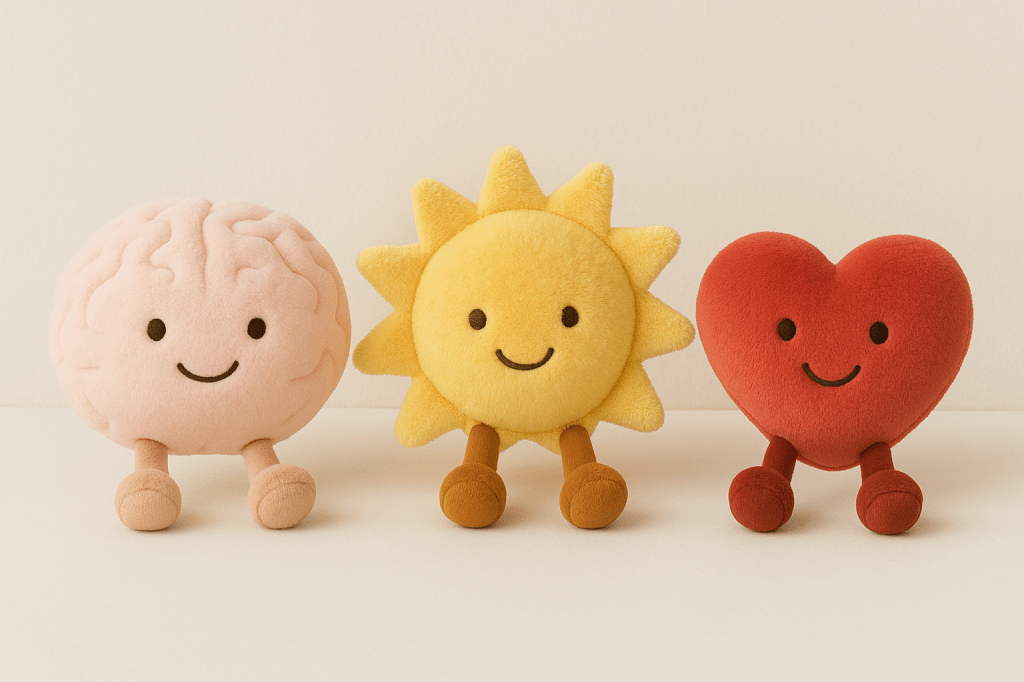
- A special line of plushies designed around mental health icons (e.g., a brain, a heart, a sunshine character)
- A cross-platform social media campaign delivering daily affirmations, self-care reminders, and community prompts
- Content that felt authentic to Jellycat’s gentle, whimsical voice while still supporting serious topics
🤖 Step 2: Using AI to Brainstorm and Build
AI didn’t just help me write captions. It helped bring the whole vision together.
Here’s what AI contributed to:
- Campaign messaging: I used ChatGPT to ideate affirmations and soft-touch messages that align with both Jellycat’s voice and mental health best practices.
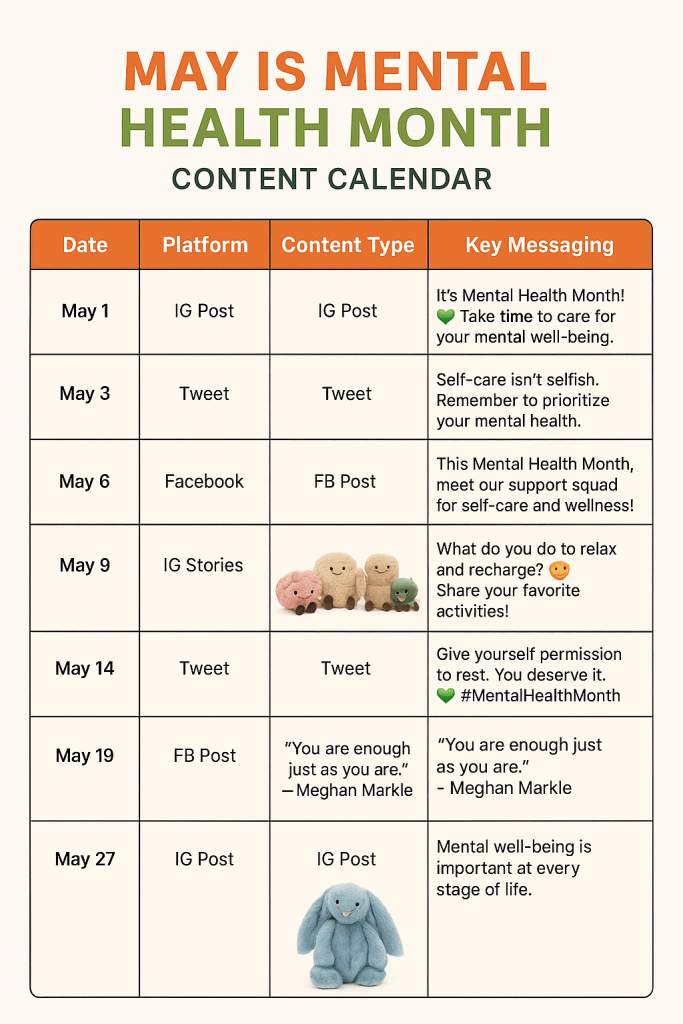
- Platform strategy: I created a platform-specific content calendar for Instagram, Twitter, and Facebook, featuring post types like:
- “Meet the Plush” character intros
- Daily affirmations
- Community reposts and user-generated content
- Visual design prompts: Using AI image generators, I created mock-ups of plush characters like:
- A pink brain with a stitched-on smile
- A glowing sun with soft arms
- A calming heart plush
- Inspiration prompts: I referenced tools like the Spin Sucks AI Prompt Library to guide tone, audience targeting, and post structure.
- Content Calendar: AI generated a mock content calendar for the month of May, with types of posts for different platforms and key messaging.
💬 Why This Matters
This wasn’t just a fun creative exercise—it highlighted how AI can enhance storytelling in real, strategic ways. Here’s what I learned:
- AI doesn’t replace creativity. I still had to make decisions about voice, tone, and visual direction, but AI helped speed up brainstorming and execution.
- Soft content can be powerful. Especially around mental health, comfort-driven communication can make people feel seen without overwhelming them.
- Campaigns like this work. Research shows emotional storytelling improves brand connection and retention. In fact, 76% of people experience stress-related symptoms weekly, and comforting content can help spark conversations or simply make someone feel better.
🌟 Final Thoughts
Designing this hypothetical Jellycat campaign reminded me why I love the intersection of communication and tech. With the right prompts and intentions, AI can bring an abstract idea to life.
This also increased my confidence to pitch ideas using AI. When used correctly, AI can bring your ideas to life in an incredibly efficient and powerful way. This is definitely a strategy I will use when entering the PR and communications world.
PS… Jellycat just came out with a new line of summer plushies. Here is the link to check them out… They are adorable.
https://us.jellycat.com/collections/spring-summer


 AI and Communications
Leave a comment